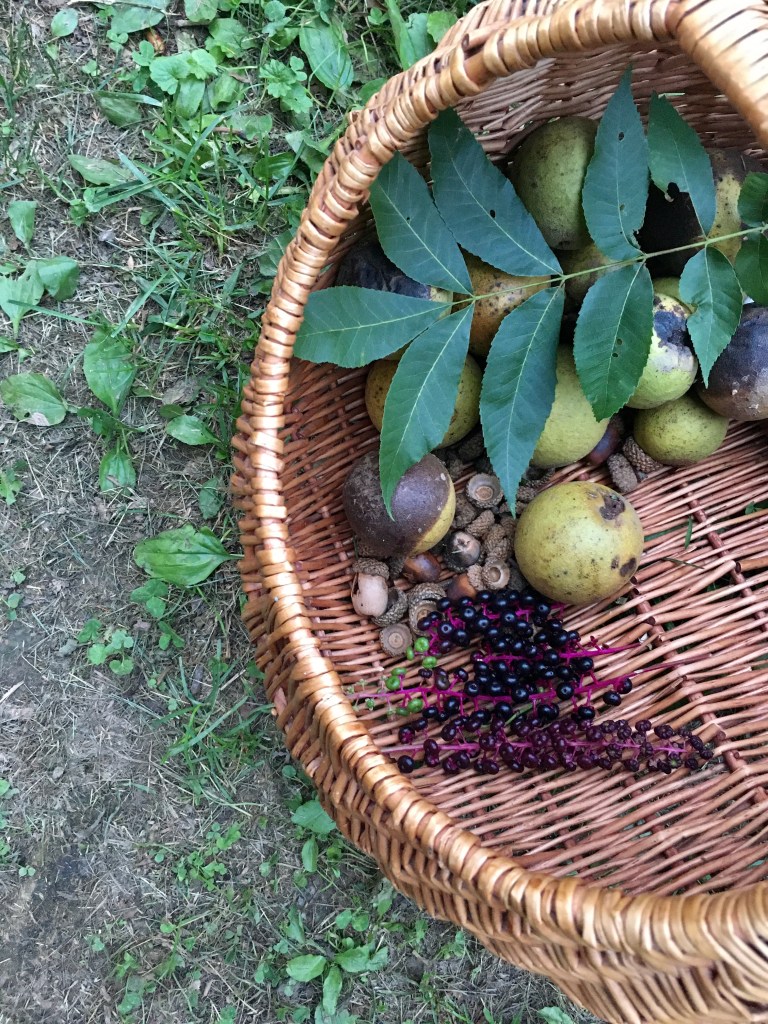
About a week ago I checked out Jason Logan’s book at the library about making ink from foraged plants and materials. The timing couldn’t have been more perfect. Walnut trees are dropping their walnuts, oak trees- their acorns. (Yes. You can make a silvery-grey ink from acorn caps, apparently!)
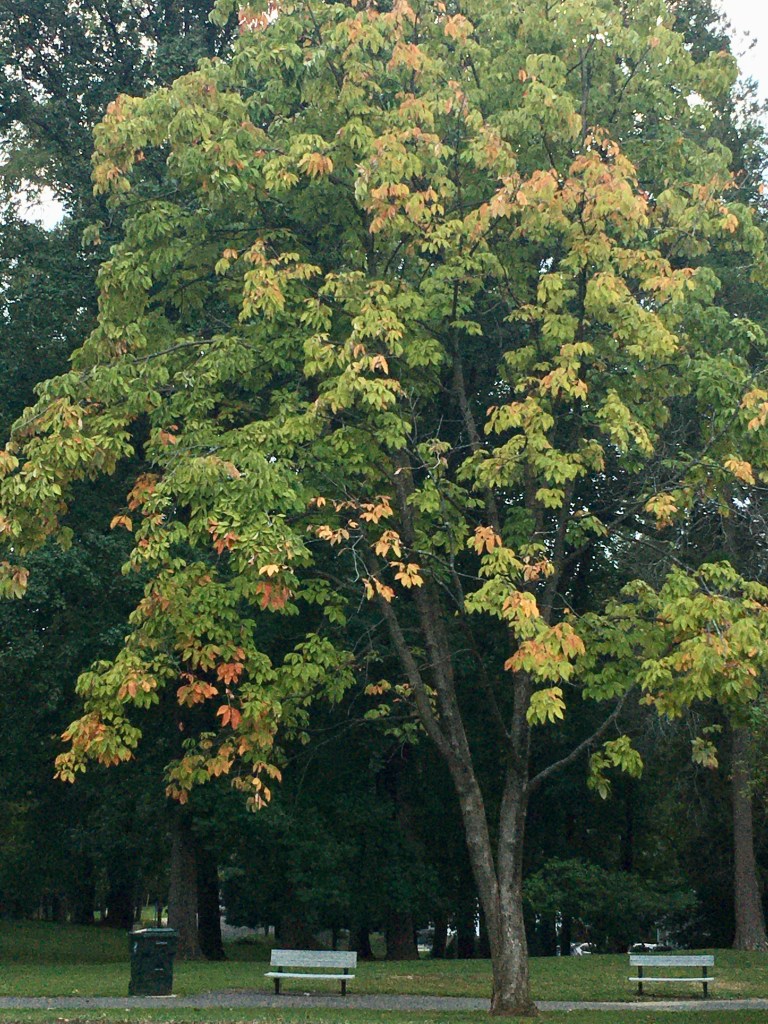
One of the most beautiful inks in the book is from the Pokeberry plant. It’s a deep, brilliant magenta, but no reference photo of the plant was given. I was like, ok. Walnuts and acorns are easy, but Pokeberry? I definitely want to make that but am not familiar. The author foraged here on the East coast, so it had to grow around here, right? I kept forgetting to google it for some reason.
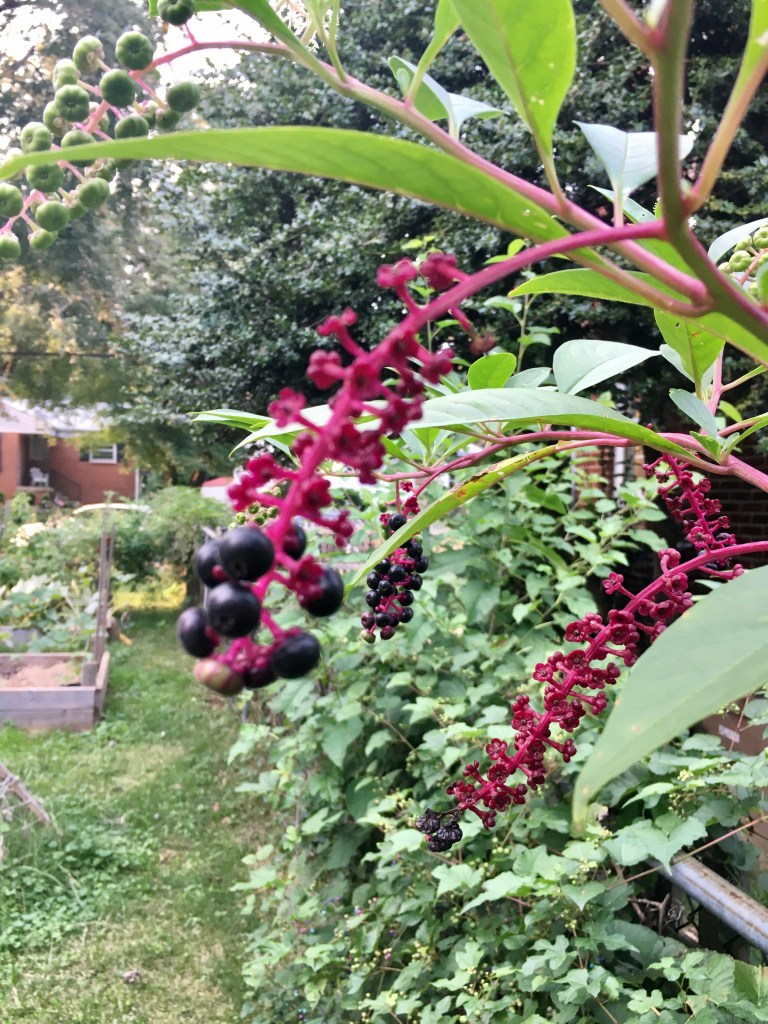
As I sat outside drinking my morning matcha, wondering…. what does this Pokeberry plant look like… I caught myself staring at the hedges by the fence with our neighbors. A plant was growing there that was definitely out-of-place. It’d perked up between the overgrowth, and had dark berries with magenta stems. I grabbed my phone and pulled up my camera to upload a photo to iNaturalist to identify it.
And by GOLLY it was Pokeberry! I was staring right at it. Hilarious!
Of course now I’m seeing it everywhere. It’s growing right at the entrance of the park when I went to gather walnuts. Much of it I couldn’t forage because the berries aren’t ripe yet, but I did manage to gather a small bit- it’s extremely simple to make. I tried it out with my batch of walnut ink this morning.
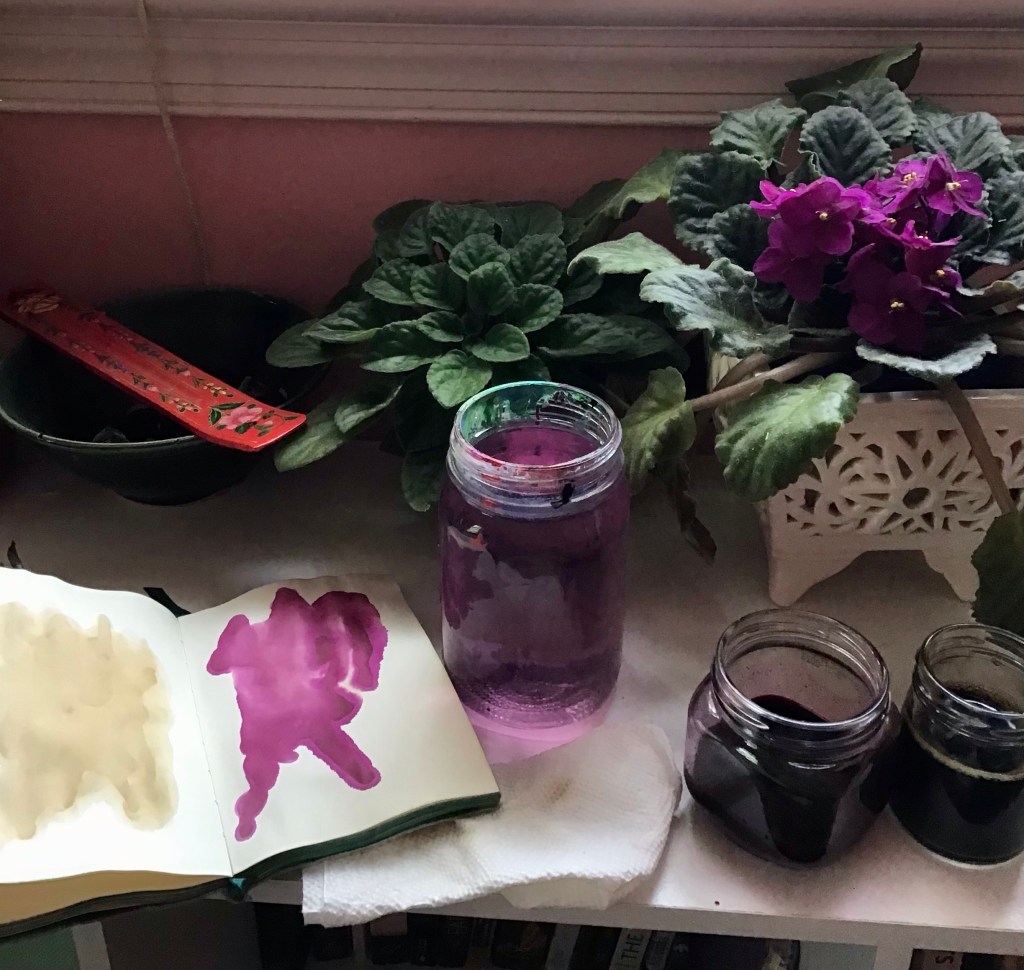
I’m deciding not to go the boiling route with the walnuts. They’re gently marinating under the sun right now with a glass lid on top, so the ink is still fairly light.
UNLIKE MY GREMLIN HANDS.
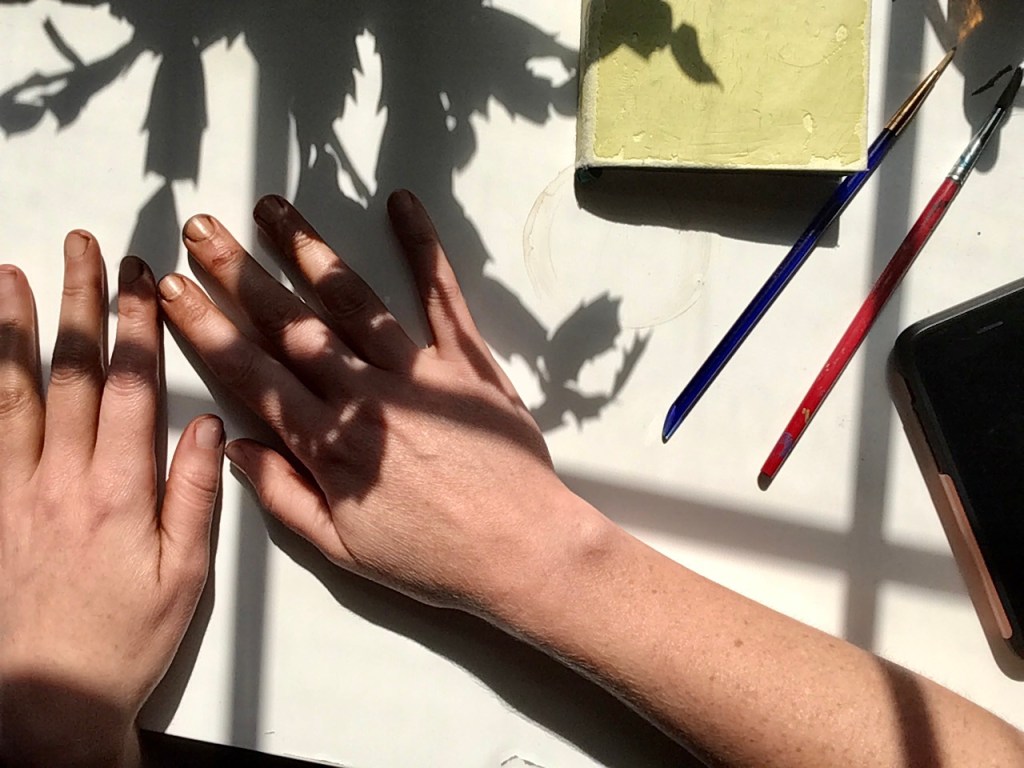
Yes. Wear gloves if you make black walnut ink. Learn from me.
So I’ll have some foraged inks on hand for people to use during sessions. It’ll be neat to use them. Especially while sitting underneath the very trees (or plants) from which they’re made.
 Creative Energy Healing
Leave a comment